From LED to Laser: How Megelin’s Duo-Lux™ Red Light Therapy Works Better
From LED to Laser: How Light Therapy Reached a New Level
LED light therapy has become a trusted tool in beauty and wellness over the past decade. Clinics, dermatologists, and at-home users rely on LED wavelengths to support skin health, reduce inflammation, and improve overall recovery. I consider LED the foundation of modern light therapy because it delivers safe, broad, and consistent exposure across large areas of the body.
However, as expectations for results increased, so did the demand for deeper and more powerful treatments. This shift led to the introduction of laser technology in light therapy devices. Unlike LED light, laser light is highly focused and concentrated. That focus allows laser energy to penetrate deeper into the skin and reach underlying tissues more efficiently.
Why Laser Therapy Changed the Conversation
Laser light offers a clear advantage when depth and precision matter. Concentrated beams allow energy to reach areas that standard LED light cannot easily access. This makes laser therapy especially effective for deeper wrinkles, stubborn inflammation, and chronic pain points.
At the same time, laser technology brings a limitation that cannot be ignored. Because laser light is narrow and precise, it treats only a small surface area at a time. It cannot provide wide, even coverage across the face or body without increasing treatment complexity or time. LED light does the opposite—it covers large areas evenly but does not reach as deeply.
This creates a fundamental trade-off in light therapy: laser delivers strength and precision, while LED delivers coverage and consistency.
Megelin’s First Step: Targeted Laser + Broad LED Design
Megelin approached this challenge with a practical and thoughtful strategy. Instead of choosing between laser and LED, the brand began using both where each performed best. In 2025, Megelin introduced several upgraded devices that applied laser light only to areas that truly required deeper treatment, while surrounding areas received wide LED exposure.
In pain-relief and recovery devices, Megelin placed laser technology on regions such as joints or inflammation-prone zones, while LED light supported overall circulation and muscle relaxation. In facial devices, laser zones focused on deeper wrinkle areas, while LED light maintained even coverage across the skin.
This approach significantly improved treatment efficiency, but Megelin continued pushing further.
The Breakthrough: Duo-Lux™ Laser + LED Fusion Technology
As Laser + LED products became more common in the market, Megelin developed a more advanced solution called Duo-Lux™. This technology eliminates the traditional compromise between depth and coverage.
Duo-Lux™ allows a single integrated diode to emit both laser light and LED light at the same time. Instead of separating laser zones from LED zones, each treatment point delivers deep penetration and uniform surface coverage simultaneously. This fusion resolves the long-standing contradiction between powerful but narrow laser light and broad but surface-level LED light.
Duo-Lux™ is the first technology of its kind to achieve this level of integration.
How Duo-Lux™ Works in Real Use
Megelin has already applied Duo-Lux™ technology to its most advanced products.
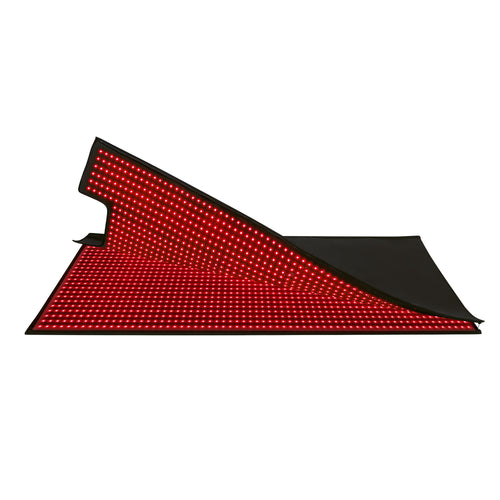
In the red light therapy sleeping bag, Duo-Lux™ appears in key stress and pain-prone areas such as the shoulders and neck, waist and abdomen, and knees. These regions often suffer from inflammation, stiffness, and chronic discomfort. The fusion of laser and LED light provides deep, even therapy that supports pain relief, circulation, and recovery without sacrificing comfort or coverage.
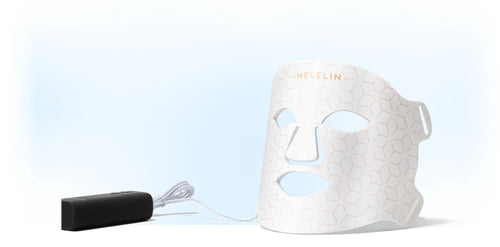
In the red light therapy face mask, Duo-Lux™ targets areas most prone to deep wrinkles, including the forehead, eye corners, and nasolabial folds. The combined laser and LED light helps soften deeper lines more efficiently while maintaining overall skin balance and safety.
Why This Matters for At-Home Light Therapy
Duo-Lux™ technology changes what users can realistically expect from at-home devices. It brings clinic-level thinking into daily routines without increasing complexity or risk. Instead of choosing between depth or coverage, users receive both in a single session.
For anyone seeking stronger anti-aging results, deeper pain relief, or more efficient full-body therapy, this evolution represents a meaningful step forward in light therapy technology.